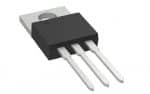
An LDO regulator, or low-dropout regulator, is a DC linear voltage regulator that operates even when the voltage supply is extremely close to the output voltage. The main advantages of this regulator over DC-DC converters include smaller size, lower noise, and simpler design. This linear regulator operates efficiently even when the input and output voltages differ by a small margin. This linear regulator operates at a low potential difference between the I/O voltage. This regulator IC outputs a … [Read more...]
Quantum Sensors in Autonomous Cars : Working & Applications
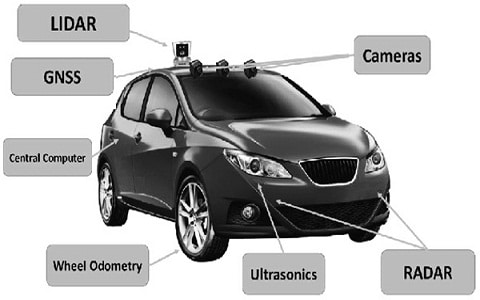
The automotive industry is transforming, with autonomous vehicles (AVs) at the forefront. These self-driving systems rely on sensors—such as LiDAR, radar, cameras, and ultrasonic devices—to perceive their environment. However, conventional sensors face limitations in poor weather, GPS-denied areas, or high-traffic scenarios. Enter quantum sensors —a revolutionary technology that leverages the principles of quantum mechanics to provide ultra-precise measurements of position, navigation, and … [Read more...]
All the Sensors That Power Fully Driverless Cars in 2025 — What’s In, What’s Out, and What’s Next
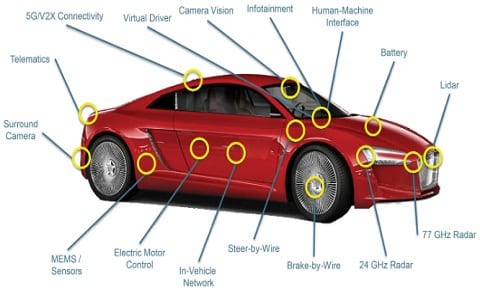
For more than a century, human drivers have relied on their eyes, ears, and reflexes to navigate roads. Today, with the arrival of fully driverless cars, those biological sensors are being replaced by an array of advanced technologies that allow machines to perceive their surroundings in extraordinary detail. From laser-based lidar scanners to high-definition cameras, from radar units that see through fog to microphones that hear sirens, these sensors in driverless cars work together to give an … [Read more...]
FPGA vs GPU vs TPU : Best Hardware for AI Applications
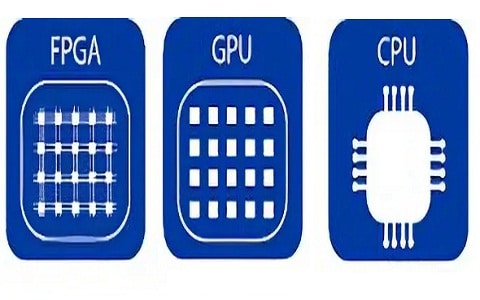
Artificial Intelligence (AI) applications require massive computational power to handle complex mathematical operations like matrix multiplications, deep learning model training, and inference. Over the last decade, three major hardware architectures have become central to AI workloads: Field-Programmable Gate Arrays (FPGAs), Graphics Processing Units (GPUs), and Tensor Processing Units (TPUs). Each of these platforms offers distinct advantages and trade-offs in terms of speed, flexibility, … [Read more...]
ISRO vs DRDO : Which is Better for ECE Engineers?
Choosing the right career path after completing Electronics and Communication Engineering (ECE) can be a life-defining decision. Two of the most prestigious and sought-after government organizations for ECE graduates in India are the Indian Space Research Organisation (ISRO) and the Defence Research and Development Organisation (DRDO). Both are involved in cutting-edge research and development that contributes to national pride and strategic advancement. But when it comes to career growth, … [Read more...]
Differences Between n-Well and p-Well CMOS Processes
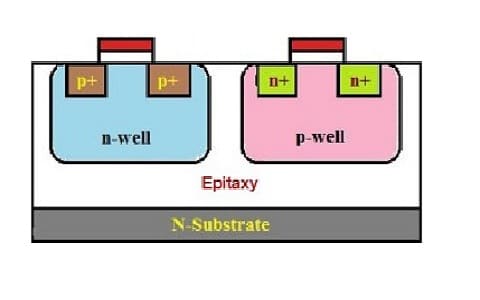
In CMOS (Complementary Metal-Oxide-Semiconductor) fabrication, well formation is a critical step that enables the integration of both NMOS and PMOS transistors on the same silicon substrate. The two main types of well technologies used are the n-well and p-well processes. Understanding the differences between these two approaches is essential for electronics engineers, VLSI designers, and students preparing for competitive exams like GATE or IES. This article explores the key differences between … [Read more...]
Top Certification Courses for ECE Students to Boost Government Job Prospects
Electronics and Communication Engineering (ECE) is a diverse and high-potential branch of engineering. However, the competition for government jobs is intense. While core knowledge and strong fundamentals are essential, adding industry-relevant certifications can significantly enhance your chances of landing government job opportunities, especially in research, PSUs (Public Sector Undertakings, the defense, and the telecommunication sectors. In this article, we explore the top certification … [Read more...]
Top 5 IR Receiver Modules Compared : KY-022 vs TSOP382 vs HX1838
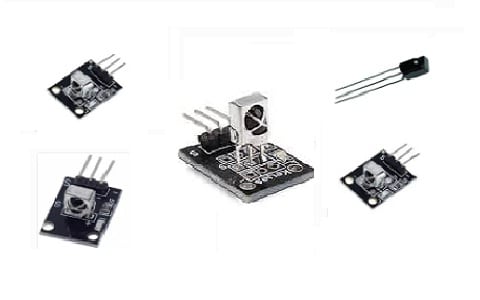
In today’s world of remote-controlled systems, IR (Infrared) receiver modules play a vital role in enabling wireless communication between electronic devices. Whether you are building a home automation system, a DIY electronics project, or an industrial sensor network, IR receiver modules help decode signals from standard remote controls. This article compares five of the most popular IR receiver modules: KY-022, TSOP382, HX1838, VS1838B, and TL1838, focusing on their features, specifications, … [Read more...]
DIY Solar USB Phone Charger : Step-by-Step Guide
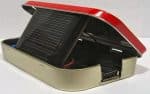
In a world increasingly reliant on sustainable energy, creating your own DIY solar-powered USB charger is not only a great eco-friendly project but also an excellent way to understand basic electronics. Whether you're an engineering student, hobbyist, or eco-conscious traveler, this project is simple, affordable, and doesn’t require advanced skills. This article provides brief information on a DIY solar USB phone charger step-by-step procedure. What is a Solar USB Phone Charger? A Solar USB … [Read more...]
DIY USB Fan Powered by a Temperature Sensor
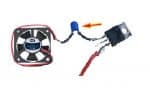
This article explains how to design a DIY USB fan that is powered by a temperature sensor. Additionally, it provides instructions on how to use a temperature sensor (LM35 or DHT11) to trigger a fan, how to power the project via USB, how to build a control circuit using a transistor, and how to test, calibrate, and upgrade the system. DIY USB Fan Powered by a Temperature Sensor The required components to make this DIY USB fan powered by a temperature sensor include the following. … [Read more...]
- « Previous Page
- 1
- 2
- 3
- 4
- 5
- …
- 26
- Next Page »