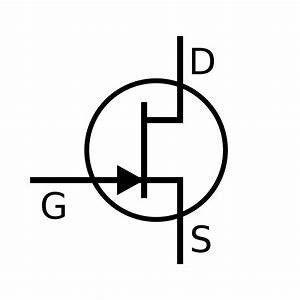
A JFET or Junction Field Effect Transistor is a transistor that classified under the category of FET. These are known for its voltage-controlled transistors where it doesn’t depend on the current for biasing. These consist of source, gate and drain as its terminals. This transistor comes under unipolar devices. The reason for this is that the conduction is dependent on the majority of the charge carriers. These FETs has the capability of consuming lesser amounts of power. It can be manufactured i … [Read more...]
What is P-Channel MOSFET : Working and Its Characteristics
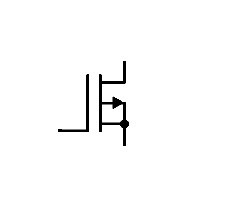
P-Channel MOSFET is a classification of Metal Oxide Semiconductor Device. This consists of the n-substrate in the middle with light doping concentration. These are the three terminals devices. It possesses uni-polar characteristics because its operation is dependent on the majority of the charge carriers. In this, the majority of the carriers are holes because of two p materials utilized in the circuitry. It is further classified based on the existence of the channels. If the channel exists by … [Read more...]
Zener Diode Working and Its Characteristics
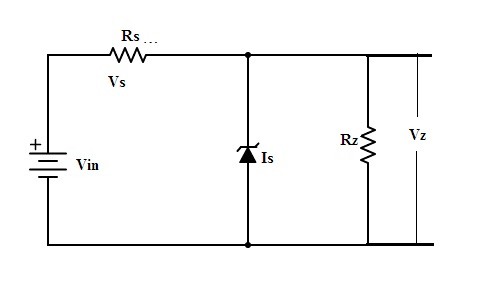
A basic semiconductor diode can operate in forward bias but it cannot conduct during reverse bias. The special type of diode that can conduct in reverse bias is referred to as a Zener diode. This diode can conduct in forward bias just like a normal diode. The junction for the Zener diode will be heavily doped. Because of this reason, it can work as normally as a basic junction in forwarding bias and can tolerate the reverse currents during reverse bias. The main purpose of it is to use in … [Read more...]
MOSFET as a Switch and Its Characteristics
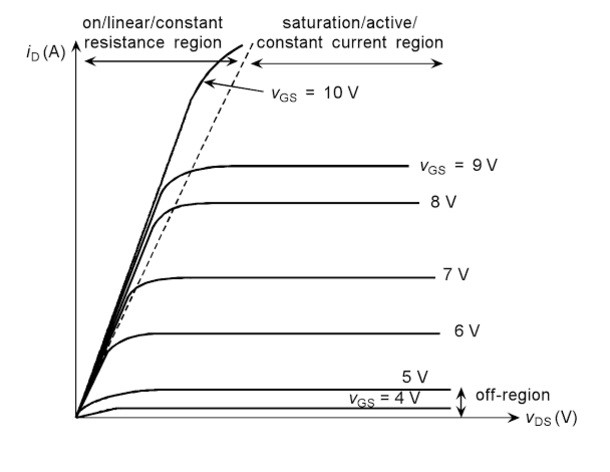
MOSFET Switch is a metal oxide semiconductor device that consists of three terminals known as source, gate, and the drain. It comes under the classification of basic field-effect transistor (FET). The conduction is either dependent on the flow of electrons or holes as per the type of the channel. This makes the device to be unipolar. Other than three terminals there exists one more type of terminal that is referred to as the substrate or the body but it is neither used in input nor output … [Read more...]
What is MOSFET : Working and Its Applications
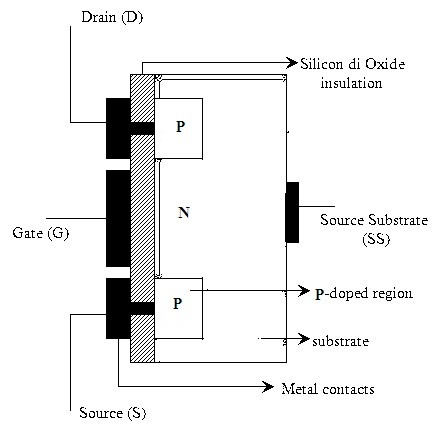
MOSFET is a metal oxide semiconductor that is under the category of the field-effect transistor (FET). These transistors are widely used under the varieties of the applications relating to the amplification and the switching of the devices. Because of its fabrication MOSFET's are available in smaller sizes. It consists of a source, drain, gate and the substrate of the transistor as its terminals. For the circuitry of analog or it be digital this one is the widely preferred transistor. Based on … [Read more...]
Basics of FET, Working Types and Its Applications
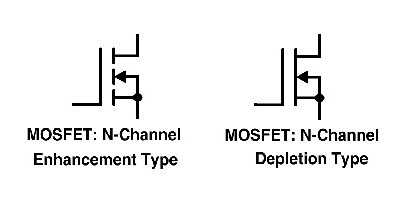
FET stands for the Field-effect transistor. These transistors are designed to overcome the drawbacks of the bipolar junction transistors. As the basic transistors have the junction of the emitter in the mode of forwarding bias this makes the device to operate at low impedance levels. This introduces considerable amounts of noise levels. FETs possess all the characteristics which can overcome the drawbacks of bipolar junction transistors and can be a good replacement for the vacuum tubes as well … [Read more...]
Basics of Common Collector Amplifier, Characteristics and Applications
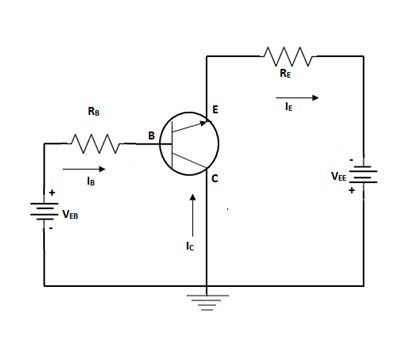
A Common Collector Amplifier is formed from the basic Bipolar Junction transistor (BJT). Basically it is required to have four terminals so that two are preferred for the input and the remaining two is for output side. But it has only three terminals named as collector, base and the emitter. Among these terminals one is made common so that it can be connected on both sides of input as well as output. This leads to the formation of three configurations that are common base, common collector … [Read more...]
What is a Common Emitter Amplifier : Working and Its Characteristics
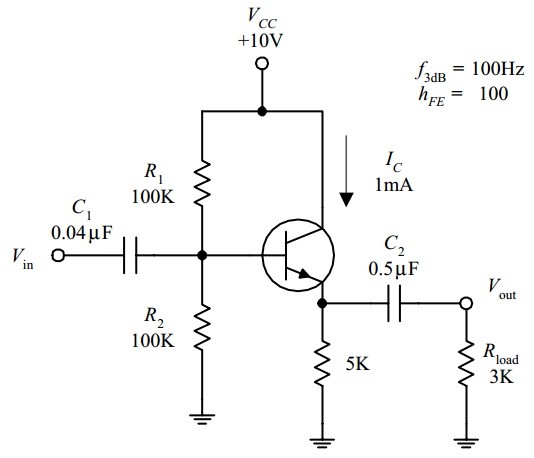
Common Emitter as an Amplifier is a configuration of the basic Bipolar Junction Transistor (BJT). As it consists of three basic terminals that are base, emitter and the collector but for the input and the output circuit connections it require minimum of four terminals. In order to overcome this drawback a terminal among those three terminals made common so that it behaves in common for both input and output circuitry connections. When emitter is made common to both input and output then it … [Read more...]
What is Amplifier : Circuit Working and Its Applications
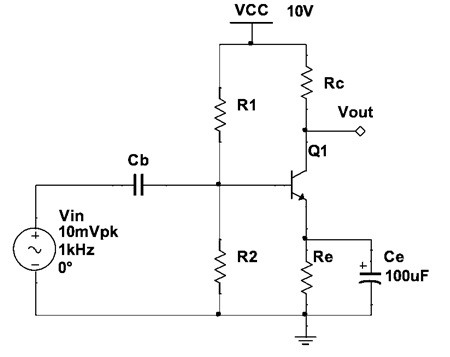
An amplifier is a basic circuit that is obtained from the transistors. These devices are designed in such a way that the transistors with the low value of the input signal are converted in terms of the signals which possess high strength. These are most widely used in the concept of long-distance communication and also at the place where the wireless data transmission is used as the media. These are the basic devices installed in the transmitters and the receivers. As the transistor is common … [Read more...]
Transistor as a Switch – Circuit Diagram, Working & Applications
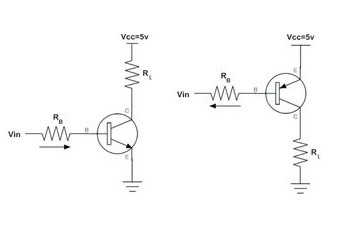
Basically transistor is a type of semiconductor device. These devices consist of three numbers of terminals. The interaction among the two terminals will be in such a way that two junctions are formed in it. These junctions and altogether the terminals are responsible for the generation of the current either the current controlled or the respective voltage-controlled devices are designed. This article discusses below about Transistor as a Switch along with its working and applications. The … [Read more...]
- « Previous Page
- 1
- …
- 5
- 6
- 7
- 8
- 9
- …
- 12
- Next Page »