
CoAP (Constrained Application Protocol) is an application layer protocol, introduced in 2014 by the Internet Engineering Task Force and specified within IETF RFC 7252. This protocol was web-based which resembles HTTP, and thus mainly designed for constrained devices. CoAP small and low-power devices to connect the IoT (Internet of Things) and also converse with the wider Internet with the least resources. This protocol has a minute base specification that can be expanded through extra … [Read more...]
Automotive Ethernet vs CAN : Detailed Comparison, Architecture, Speed & Its Applications
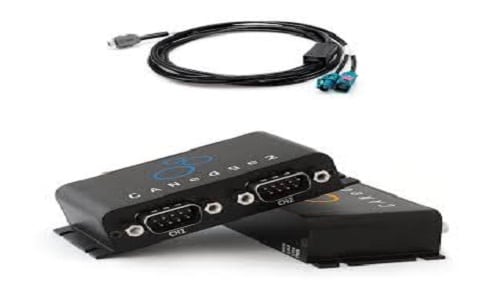
Modern vehicles rely heavily on in-vehicle communication networks to connect ECUs, sensors, ADAS modules, infotainment systems, cameras, and powertrain components. For more than 30 years, the Controller Area Network (CAN) has been the backbone of automotive communication. However, with the rise of ADAS, autonomous driving, high-resolution cameras, radar, and infotainment, traditional CAN is no longer sufficient in many domains. This gap has led to the adoption of Automotive Ethernet, a … [Read more...]
CAN vs CAN FD : Key Differences, Working, Frame Format & Advantages Explained
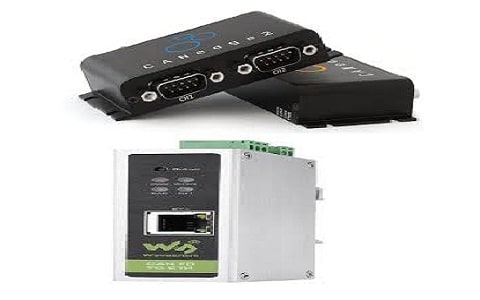
The Controller Area Network (CAN) and its successor CAN Flexible Data Rate (CAN FD) are two of the most widely used in-vehicle communication protocols. Both are essential in modern automotive electronics, industrial automation, and embedded systems, where reliable, deterministic, and high-speed data transfer is critical. While Classical CAN has served the automotive industry for decades, the growing demand for faster data transmission, larger payloads, and advanced ECUs led to the development of … [Read more...]
CAN FD Protocol : Specifications, Architecture, Working, Vs CAN & Its Applications
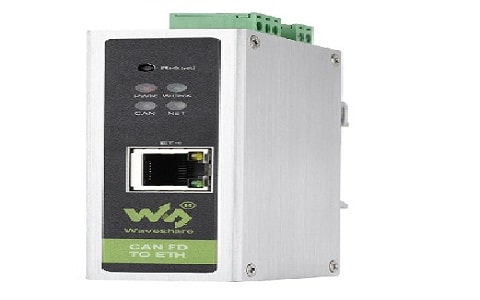
Communication protocols are a set of rules for ECUs that define how electronic control units exchange data with common protocols like CAN, Ethernet, LIN, and FlexRay. These communication protocols can normalize message formats, error detection, data rates, and timing. Thus, ensures efficient and consistent communication between devices within complex systems like industrial equipment and vehicles. Similarly, CAN FD is an enhanced communication protocol for ECUs that provides larger data payloads … [Read more...]
Architecture of LPWAN System : Communication Flow, Features, Variants & Its Limitationss

Low Power Wide Area Network (LPWAN) technologies have become the backbone of modern IoT deployments because they enable long-range communication, ultra-low power usage, and low-cost connectivity for millions of devices. Whether it is smart metering, industrial monitoring, agricultural automation, or smart city applications, LPWAN networks allow simple battery-powered sensors to transmit small packets of data across several kilometers with minimal power consumption. To understand how these … [Read more...]
LPWAN (Low Power Wide Area Network)Technologies – Characteristics, vs Sigfox, LTE-M, NB-IoT, Advantages, Architecture
In the world of the Internet of Things (IoT), billions of small devices — like sensors, meters, and trackers — are constantly collecting and sharing data. However, most of these devices are designed to operate in remote or hard-to-reach locations and often run on small batteries for years. Traditional wireless networks, such as Wi-Fi or Bluetooth, are not ideal for these kinds of applications because they consume more power and have limited coverage. To solve this challenge, engineers developed a … [Read more...]
LoRa Protocol : Features, Architecture, Working,Differences, Modulation & Its Applications

In general, the Internet of Things has various technological solutions to transmit data above a network like WiFi, LoRa, NB-IoT, Zigbee, sub-1GHz & Bluetooth. However, long transmission distances and energy conservation can be guaranteed simultaneously within wireless communication network systems, because more energy is always needed for long transmission distances. So, this technology ensures both low-power and long-range conditions wherever transmitting a relatively small amount of data … [Read more...]
Narrowband IoT : Architecture, Working, Specifications, Differences, Advantages & Its Applications

Internet of Things (IoT) has transformed the way smart devices connect, communicate, and share data. However, as the number of IoT devices continues to grow into the billions, traditional mobile networks face challenges in handling massive connectivity with low power and wide coverage needs. This is where Narrowband IoT (NB-IoT) comes into play. Narrowband IoT (NB-IoT) is a standards-based Low-Power Wide-Area Network (LPWAN) technology developed by 3GPP to support large-scale IoT deployments. … [Read more...]
What is Radar Sensor : Pin Configuration, Working, Interfacing & Its Applications
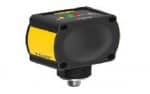
At present, semiconductor technology is developing very quickly, so the power utilization & the size of various types of radars have been reduced greatly. So, the function of radar is also getting stronger by using ultra-wideband technology, millimeter-wave, multiple transmission & receptions by increasing computing capacities. These sensors are used every day for different purposes in different applications like weather forecast weekly, onboard vehicle systems & controlling traffic. … [Read more...]
LM2698 IC : PinOut, Features, Specifications, Circuit, Working & Its Applications
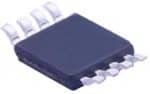
The PWM boost converter allows for a variable input & stable output. So the output is controlled through the control circuit that adjusts the duty cycle of the gating pulse to maintain a stable output. The fundamental PWM boost converter switch has benefits like easy operation & easy control. There is a problem within closed-loop applications based on the variation of PWM techniques like the harmonics current & the voltage signal. This article elaborates on PWM boost converter IC … [Read more...]
- 1
- 2
- 3
- …
- 7
- Next Page »